Background

Jared Snyder
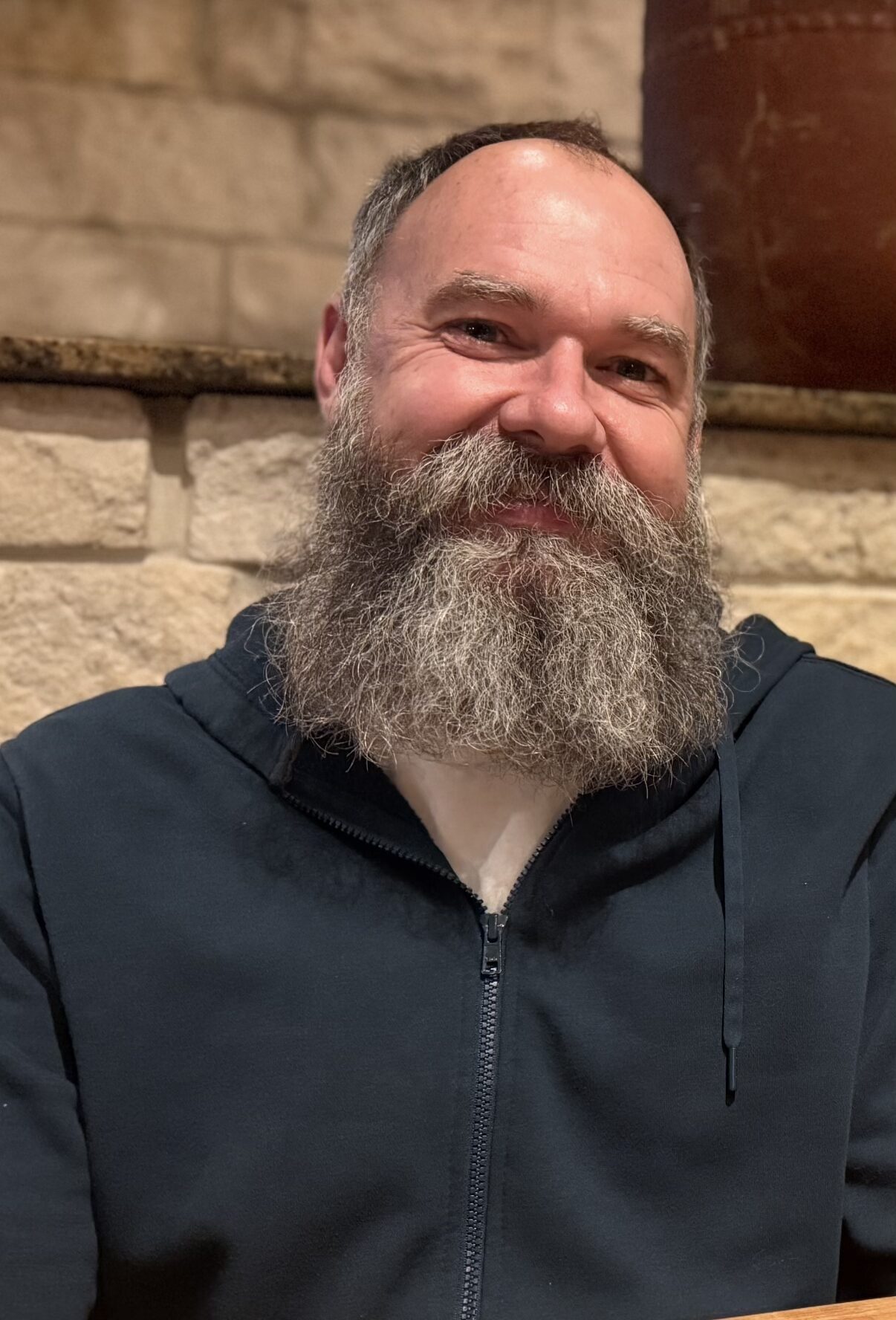
My name is Jared Snyder, and I am a Xennial (1980) who was born and raised in Virginia. I spent most of my life there until 2024, when I got married and moved to Missouri. I was also born and raised in the 2×2 church and spent 21 often-difficult years in its ministry as an unsalaried, celibate preacher with no permanent residence. I left the 2×2 ministry and church in 2023, angered and disappointed by its response to revelations of widespread abuse and cover-up. The circumstances surrounding my exit caused me to deeply reconsider everything about my existence and spirituality. As I searched for ways to understand and build a life, I discovered the Center for Non-Religious Spirituality. I later entered the Center’s training for non-religious spiritual direction.

Training and Ongoing Formation

Jared Snyder
  • Certified Non-Religious Spiritual Director through the Center for Non-Religious Spirituality (CNRS).
  • Professional and spiritual communities — ongoing participation in CNRS, Spiritual Directors International (SDI), and No Nonsense Spirituality.
  • Continuing education — learning resources and coursework through multiple organizations, with access to all current and future CNRS training material.
  • Spiritual direction, supervision, and peer support — regular engagement with my own spiritual director, a spiritual direction supervisor, and professional community.
  • More about my training and ongoing formation ↗

Spiritual direction is:

  • An ancient reflective practice for deeper spiritual attention and discernment, with roots in many well-known faith traditions.
  • A nonjudgmental space where someone can talk and reflect on the unique aspects of their existence and “let them breathe.”
  • A relationship that makes room for questions and experiences without pressure or urgency to explain, resolve, decide, or have all the answers.
  • An invitation to notice what is happening in and around us, and what is emerging, at a contemplative pace.
  • A distinct form of support that does not seek to compete with or replace medical care or other helping professions.

Spiritual acknowledges the parts of the human experience that are difficult or impossible to define.
Direction refers to orientation—finding direction rather than being directed.

A spiritual director brings a gentle presence, deep listening, experience, and a lifelong pursuit of wisdom and compassion into the spiritual direction relationship.

What “non-religious” does and doesn’t mean:

  • It doesn’t assume a religious framework, language, or belief system as its starting point or destination.
  • It does make room for someone’s journey to unfold within or outside of religion, without expectations of conversion or reconversion.
  • It doesn’t mean an agenda to deconvert or a presumption that the best outcomes will be found outside of religion.
  • It does allow for exploration of the role religion might play in someone’s life, without presuming help or harm.
  • Not anti-religious, but opposed to religious harm.

Reasons for Seeking Non-Religious Spiritual Direction

These can include, but are not limited to:

Crisis, distress, or transition
  • Life or faith transitions
  • Religious deconstruction or reconstruction
  • Loss of community, belonging, or identity
  • Feelings of meaninglessness, nihilism, or existential dread
  • Spiritual shifts arising from significant life events, grief, or loss
  • Searching for the roots of unhappiness or discontent
  • Fears related to mortality or uncertainty
  • A space to say things that may be difficult to say elsewhere
Exploration, growth, or ongoing support
  • Spiritual exploration or expansion
  • Spiritual growth and maturity
  • Self-discovery and developing a new relationship with oneself
  • Exploring the meaning of spiritual, mystical, peak, psychic, or psychedelic experiences; dreams; synchronicities; etc.
  • Experimenting with and co-creating meaningful life rhythms, practices, and rituals
  • Regular check-ins for ongoing reflection and spiritual support

Non-religious spiritual direction has no predetermined destination, but it is oriented toward cultivating existential health.

When a long-held worldview or belief system collapses or no longer feels trustworthy, the disorientation can feel overwhelming. Existential health offers a way to begin finding new footing and rebuilding a sense of coherence.

Existential refers to the realities, questions, and givens of our human existence.
Health in this context relates to capacity, coherence, and participation.

To quote directly from my training:

Existential health is the condition of being able to live from the inside out. It is the experience of having a self you can trust, a life that feels coherent, and a sense of meaning that arises from your own lived experience rather than from external authority.

And in my own words:

Existential health is not a final outcome, but a developing capacity to participate in life, fully inhabit it, discover meaning, and feel at home in our own existence.


Each session begins wherever you are and proceeds through conversation and reflection.
Although there isn’t one prescribed method or destination, there is a common arc that might develop over multiple sessions:

  1. Getting the story / Creating the map
    Understanding your story and where you are now: worldview, relationships, losses, sources of meaning, questions, and circumstances.
  2. Noticing / Discernment
    Giving attention to what feels alive, absent, stuck, unresolved, inherited, workable, or unworkable. What seems to support or interfere with existential health?
  3. Exploration / Experimentation
    Considering new perspectives, practices, relationships, boundaries, or ways of understanding yourself. What movement might lead toward better existential health?
  4. Integration / Ongoing care
    What becomes part of the rhythm of life? What to stay with, change, or abandon? What continues to emerge?

Spiritual direction can also provide a kind of routine maintenance: a regular space to reflect, revisit, reorient, and attend to your existential health.

You should be able to enter this relationship slowly and cautiously, with the information you need, without first having to pay for a session—and to leave just as freely whenever you choose.

That’s why I offer the free one-hour intro session. After scheduling, I’ll send a form that includes a consent and ethical agreement, along with an optional questionnaire that can help me get to know you. The intro session gives us time to talk, ask questions, get a feel for working together, or simply begin.

There is no required frequency or ongoing commitment. If you decide you’d like to continue, you can schedule another session whenever you’d like. If there are no convenient times available please contact me.